How to plan your crypto portfolio for the next bull cycle in 2026
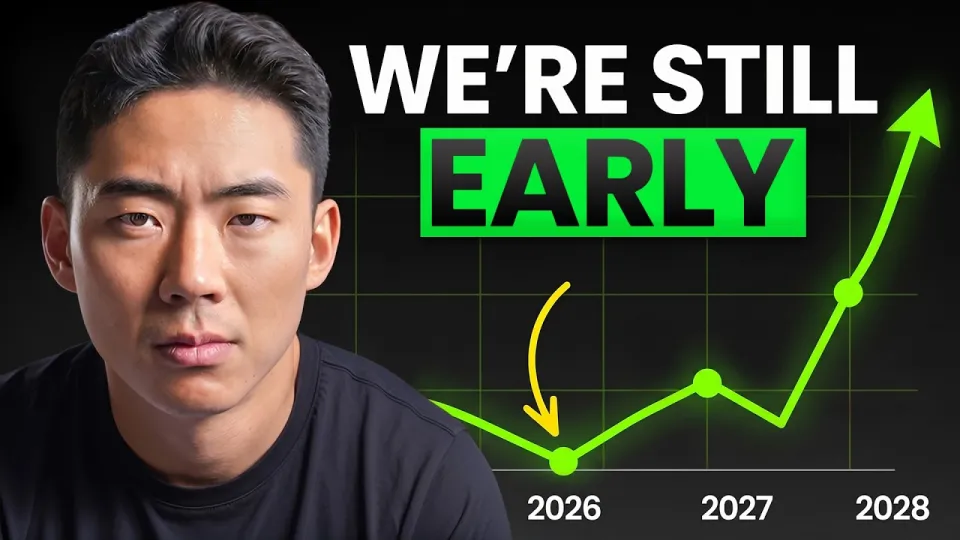
Video: my plan to make millions in crypto 2027
Need articles like this for your video? They help promote it on YouTube and Google — order them in the Telegram bot @sat_sit_bot. Articles with your video embedded are written and posted by the bot itself — on popular topical sites (no ads). Try it free: 50 articles on us.
A crypto plan for the next bull cycle in 2026 works best as a written set of rules rather than a list of coins: decide how much of your portfolio goes to Bitcoin, Ethereum and altcoins, when you add, and what would make you exit. Brian Jung's October 2026 breakdown, "my plan to make millions in crypto 2027," follows that structure — a bull case, the narratives expected to drive the next cycle, and a personal allocation plan. His paid research tier and waitlist sit behind the Kaizen Pro product page, while the free market report is a separate newsletter.
Why the bull case rests on narratives, not one coin
The central argument in the video is that crypto cycles are driven by rotating narratives, and that being early to a narrative matters more than owning the "best" asset. Jung's outline splits the discussion into why he is bullish and which narratives he expects to drive the next cycle, before he gets to his own plan. That ordering is the useful part: the thesis comes first, the positions second.
A narrative-led approach means you are effectively making several smaller bets instead of one big one. In practice that looks like:
- Define the three to five themes you believe will attract capital — for example Ethereum scaling, specific layer-1 ecosystems, or infrastructure plays.
- Assign a maximum percentage of your crypto sleeve to each theme before you buy anything.
- Pick one or two liquid assets per theme rather than a long tail of micro-caps.
- Write down what evidence would prove the theme wrong.
This is also where the most-liked comment under the video lands. A viewer notes that the same bullish case was made in 2025 and they still lost everything. That is not an argument against the thesis; it is an argument about execution. Being directionally right and positionally wrong produces the same result as being wrong.
The narratives Jung flags for the next cycle
The video's middle section is dedicated to the narratives expected to carry the next cycle, and the tags attached to it — Bitcoin, Ethereum, altcoins — map closely to that list. Without a transcript, the honest summary is structural rather than a roll call of tickers: the framework treats Bitcoin as the market's liquidity anchor, Ethereum as the base layer for the largest application ecosystem, and altcoins as the high-beta expression of whichever narrative is working.
The practical takeaway for a reader building a plan is how to treat each layer differently:
- Bitcoin sets the regime. When BTC is trending, altcoin narratives get oxygen; when it is not, most of them stall regardless of fundamentals.
- Ethereum is where most on-chain activity and institutional product development concentrates, which makes it a core holding rather than a trade for many allocators.
- Altcoins are where the asymmetric returns live and also where most drawdowns come from. Size them as venture capital, not as savings.
A viewer comment singles out SUI as a long-awaited mention, which is a reminder that these lists are fluid. Treat any specific name in a cycle video as an illustration of a theme, not a permanent allocation.
How to size a crypto portfolio you can actually hold
The most common failure in retail crypto is not bad asset selection but position sizing that forces a sale at the worst moment. A plan that survives a 40% drawdown has to be built assuming the drawdown happens.
A simple, defensible structure looks like this:
- Decide the total crypto allocation as a share of net worth — capital you could lose entirely without changing your life.
- Split that sleeve roughly 50/30/20 across Bitcoin, Ethereum and altcoins, then adjust by conviction, not by how a coin performed last week.
- Cap any single altcoin at a small single-digit percentage of the crypto sleeve.
- Keep a stablecoin reserve for staged entries rather than deploying everything in one week.
- Rebalance on a calendar schedule, not on emotion.
One viewer comment describes putting 50% into altcoins, which is a common instinct late in a cycle. The question to ask before doing that is what happens to the plan if altcoins fall 60% and Bitcoin holds — because that is a normal outcome, not a tail risk.
Staged entries and exits beat one big bet
Timing a cycle top or bottom is not required to make a plan work; staging is the substitute for prediction. Jung's own framing — a plan to make millions in this cycle — implies a multi-step process rather than a single trade, and staging is the mechanism that turns a thesis into something executable.
A workable staging rule set:
- Divide your intended capital into four to six tranches.
- Deploy on time intervals, on defined drawdown levels, or on a mix of both — but decide the rule in advance.
- Take partial profits at pre-set multiples rather than waiting for a number you will only recognise in hindsight.
- Keep a written invalidation level for each position: the price or event at which the thesis is dead.
The comment section reflects how much of this is psychological. Several viewers note the channel is always bullish, and one jokes that the forecast amounts to "it could go up or it could go down." Both are fair. A cycle thesis is a probability statement, and the plan's job is to limit the cost of being wrong while keeping exposure if the thesis is right.
Regulatory headlines and what they change for holders
One of the higher-engagement comments argues that a rejection — specifically around Clarity — may be better for crypto, on the logic that holders do not want banks controlling the asset class. That is a useful lens for reading regulatory news in 2026: the market reaction depends less on whether a rule is friendly and more on who it empowers.
For a portfolio plan, the practical rules are:
- Do not resize a position based on a single headline; wait for the actual text of a rule or ruling.
- Separate news that changes access (custody, banking, ETFs) from news that changes narrative sentiment.
- Treat clarity as bullish for institutions and potentially neutral-to-negative for the decentralisation thesis — both can be true at once.
Common questions from viewers, answered
Three recurring doubts show up under cycle videos, and each has a concrete answer.
"Isn't this just the same call as last cycle?" Often yes, in direction. The difference is in the rules: allocation bands, staged entries and an invalidation level. If a plan has none of those, it is a mood, not a plan.
"Should I go 50% altcoins?" Only if a 60% altcoin drawdown leaves your broader finances intact. For most people, altcoins belong in the smaller slice of the crypto sleeve.
"When is the top?" Nobody knows, and predictions range widely — one commenter argues the cycle top lands in 2029, others expect it sooner. Profit-taking rules remove the need for an answer.
Useful links
- Kaizen Pro waitlist and research tier
- Free crypto market report newsletter
- Brian Jung on X
- Brian Jung on Instagram
- Risks and disclaimers document
Final thoughts
Brian Jung's cycle plan is most useful read as a template rather than a signal: a bull case, a narrative map, and then an allocation rule set that assumes the thesis can fail. The video is explicit that it is educational content, not financial advice, and the comment section shows why that matters — plenty of people were directionally right last cycle and still lost money. Copy the structure, set your own numbers, and write down your exit before you need it. If you want the author's own framework in more detail, the Kaizen Pro waitlist is where the channel points viewers.
Key takeaways
- Brian Jung's October 2026 video lays out a bullish crypto thesis built on narratives rather than single coins, with the cycle plan starting around the 23-minute mark.
- The core bet is that the next leg is driven by sector narratives — Ethereum, altcoins, Bitcoin — not by one asset carrying the whole market.
- Viewer pushback centers on one line: the same bullish case was made in 2025 and many retail traders still ended the year down.
- A workable plan needs pre-set allocation bands, staged entries and a written invalidation level before any capital moves.
- Most self-directed crypto losses come from position size and timing, not from picking the wrong coin.
Questions & answers
What is Brian Jung's crypto plan for the next cycle?
In his October 2026 video he lays out a bullish case built on rotating narratives, then a personal allocation plan for Bitcoin, Ethereum and altcoins. The structure is thesis first, positions second, rather than a list of tickers to buy. The video is presented as educational content, not financial advice.
How much of a portfolio should go into altcoins?
There is no universal number, but a common framework is roughly 50% Bitcoin, 30% Ethereum and 20% altcoins within the crypto sleeve, with any single altcoin capped at a small single-digit share. The test is whether a 60% altcoin drawdown leaves your broader finances intact.
Is it too late to enter crypto in 2026?
Cycle timing is unknowable, which is why staged entries exist. Splitting capital into four to six tranches and deploying on a schedule or on defined drawdowns removes the need to call a bottom. It also keeps you from deploying everything right before a correction.
What does regulation like Clarity mean for crypto holders?
The market impact depends on who a rule empowers as much as how friendly it is. Clearer rules tend to help institutional access and custody products, while some holders see bank involvement as against the decentralisation thesis. Wait for the actual text before resizing positions on a headline.
Source: my plan to make millions in crypto 2027 · Markdown version